Every intersection of the Nine Map names a capacity. This is the deep dive beneath one of them: what it means, where established thinking meets it, what the evidence does and does not support, and what might help it develop. A worked example of the pattern, not settled science.
The proposition
We make what matters knowable so that attention can become consequential.
The capacity this intersection asks us to cultivate is judgement.
Judgement is the capacity to use what is understood and discerned to weigh competing considerations and form a reasoned view that can guide consequential choices. It asks someone to integrate relevant and credible information, values, trade-offs and likely consequences, then hold a warranted position under conditions that are seldom perfectly certain.
The order matters. Knowledge informs judgement, judgement guides choice, and choice carries consequences. Judgement is not the choice itself; it is the reasoned view a choice can rest on. That is why a judgement can be sound even when the decision it informs belongs to someone else, and why judgement and agency are different capacities rather than one.
It sits at the top of the Inform column, above orientation and understanding. Read the column upward and knowing steadily becomes consequential: you locate yourself, you make meaning, then you form a view you can act on. Inform on its own can settle into transmission. Judgement is what keeps it from stopping there.
Information is not understanding, and understanding is not judgement. A system can supply a great deal of information while developing very little judgement.
In each context
The intersection remains generative as context changes: in learner choices, leadership decisions, governance judgement and the way systems distribute decision-making. Inform crossed with Empower keeps pointing towards judgement while its expression shifts.
Learning
Learners need knowledge they can use to weigh evidence, make choices and justify conclusions, rather than only recall.
Leadership
Leaders make relevant information available alongside authority that is clear enough for others to exercise judgement rather than continually escalate decisions.
Governance
Governors need enough information and context to weigh competing considerations and exercise judgement without drifting into operational management.
System design
Information, boundaries and feedback are designed so that sound local judgement is possible without requiring central control.
Theoretical perspectives
Judgement is not a single construct. Several established bodies of work illuminate different aspects of it. Some speak directly to judgement; others help explain the knowledge, thinking and conditions on which good judgement depends.
Direct perspectives
- Decision and judgement science
- Separates judging likely outcomes, valuing how much those outcomes matter, and choosing between options, and documents the systematic ways judgement goes wrong under uncertainty. A good decision and a good outcome are not the same thing.
- Expertise and domain knowledge
- Judgement is not a free-floating generic skill. It depends on knowing a field well enough to recognise what matters, and expert intuition is dependable only in settings regular enough to learn from.
- Practical wisdom (phronesis)
- The classical account of judging well in particular situations, where no rule fully settles what should be done and a reasoned view has to be formed.
- Bounded rationality
- People judge within real limits of information, attention and time. Judgement is what good reasoning looks like under those limits, not in their absence.
- Ethical reasoning
- Consequential choices carry values, not only facts. Judgement includes deciding what should count, as well as what is likely.
Important neighbours
- Adaptive expertise
- Applying knowledge fluently in novel or ambiguous situations. It illuminates judgement, but sits more naturally under Adaptability (Inquire × Empower).
- Metacognition
- Monitoring and evaluating one’s own thinking. It matters here, in noticing when a judgement is shaky, but bears as much on Discernment and Adaptability.
- Cognitive flexibility
- Shifting between perspectives or strategies as a situation demands. It supports judgement but is more central to Adaptability.
What research suggests
A caution first. What follows does not validate the six-principle model, and it is not offered as proof. It is the evidential trail: established work that concerns judgement directly, and separate work that supports part of the mechanism this intersection proposes. Keeping those two apart is what makes the caveat honest.
Research directly concerning judgement
Judgement under uncertainty is systematically biased in describable ways (Tversky & Kahneman, 1974), and people reason within bounded rather than unlimited rationality (Simon, 1955). Expert judgement is real but conditional: it becomes dependable only in environments regular enough to offer valid cues, with feedback quick enough to learn from, which is why skilled intuition and confident error can look alike (Klein, 1998; Kahneman & Klein, 2009). Where those conditions are weak, judgement can still improve by calibrating confidence and revising views as outcomes arrive (Tetlock & Gardner, 2015). Older still is the account of practical wisdom: judging well about what should be done when no rule decides it (Aristotle, Nicomachean Ethics, Book VI).
Research supporting part of the mechanism
The claim that making what matters knowable feeds judgement leans on a narrower, better-evidenced finding: higher-order thinking depends on domain knowledge rather than floating free of it (Willingham, 2007), and generic thinking skills taught apart from content tend not to transfer (Tricot & Sweller, 2014). That supports the first link in the chain, knowledge into the raw material of judgement. It does not establish the whole proposition.
So the honest position holds. The relationships around judgement have substantial theoretical and empirical neighbours, while the specific claim, that making what matters knowable while attention is consequential develops judgement, remains a hypothesis worth testing rather than a settled finding.
Research base
- Aristotle. (1999). Nicomachean ethics (T. Irwin, Trans.; 2nd ed., Book VI). Hackett. (Original work written ca. fourth century BCE)
- Kahneman, D., & Klein, G. (2009). Conditions for intuitive expertise: A failure to disagree. American Psychologist, 64(6), 515–526. https://doi.org/10.1037/a0016755
- Klein, G. (1998). Sources of power: How people make decisions. MIT Press.
- Simon, H. A. (1955). A behavioral model of rational choice. Quarterly Journal of Economics, 69(1), 99–118. https://doi.org/10.2307/1884852
- Tetlock, P. E., & Gardner, D. (2015). Superforecasting: The art and science of prediction. Crown.
- Tricot, A., & Sweller, J. (2014). Domain-specific knowledge and why teaching generic skills does not work. Educational Psychology Review, 26(2), 265–283. https://doi.org/10.1007/s10648-013-9243-1
- Tversky, A., & Kahneman, D. (1974). Judgment under uncertainty: Heuristics and biases. Science, 185(4157), 1124–1131. https://doi.org/10.1126/science.185.4157.1124
- Willingham, D. T. (2007). Critical thinking: Why is it so hard to teach? American Educator, 31(2), 8–19.
A proposed starting base, not a closed list, grouped by whether a source concerns judgement itself or supports part of the proposed mechanism.
Design implications
If we take these perspectives seriously, several design implications follow. These are design propositions, not a recipe for producing judgement.
Praxis
Practices make the design propositions concrete. For judgement, these might include decision protocols that require reasoning to be made visible, examples that compare stronger and weaker judgements, retrospectives that trace decisions to their consequences, delegated decisions with explicit boundaries, and structured deliberation that surfaces competing considerations before a view is formed.
A practice can support more than one capacity. A retrospective, for example, may develop judgement while also supporting adaptability. The Nine Map is therefore not a filing system for practices; it provides a way of asking what a practice is intended to develop.
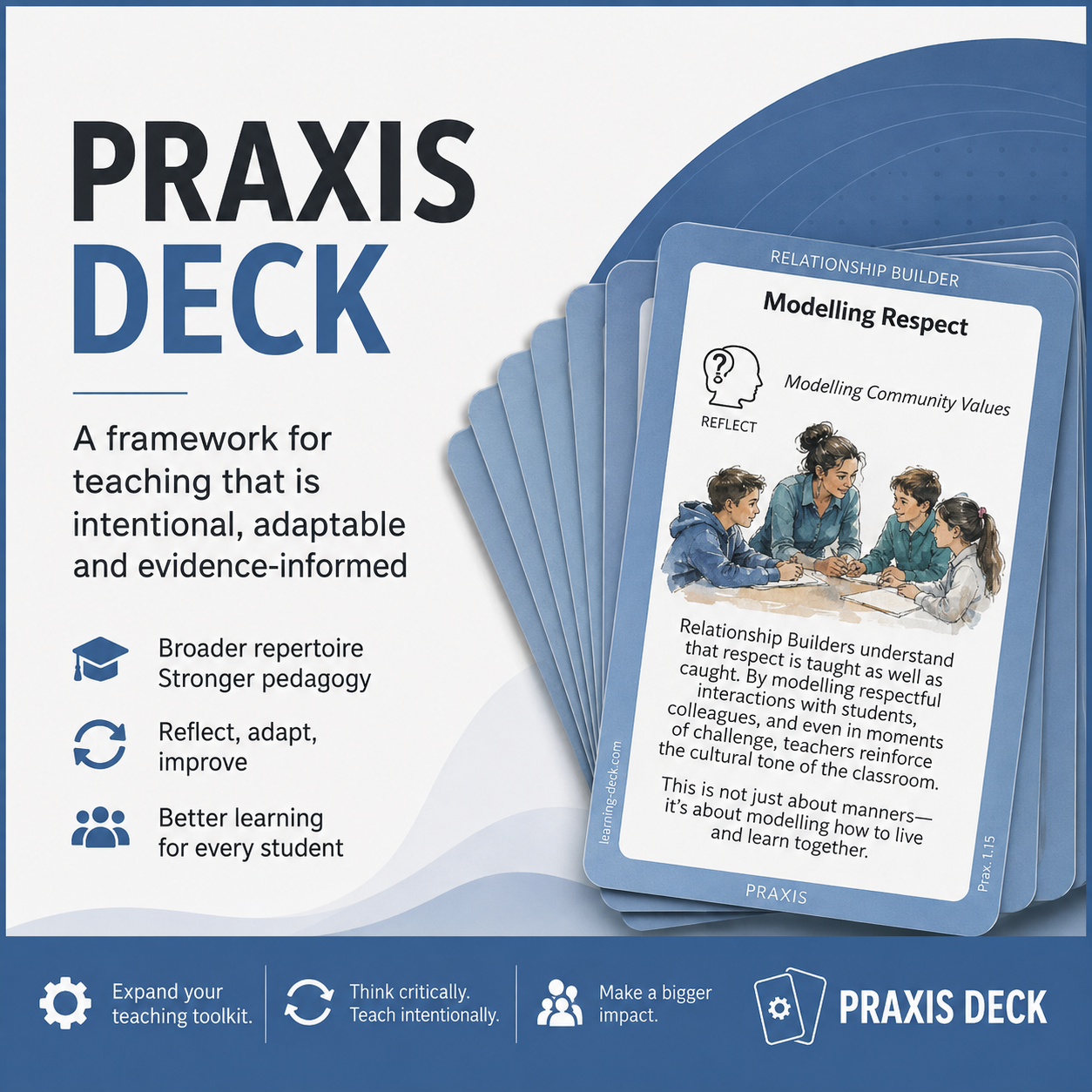
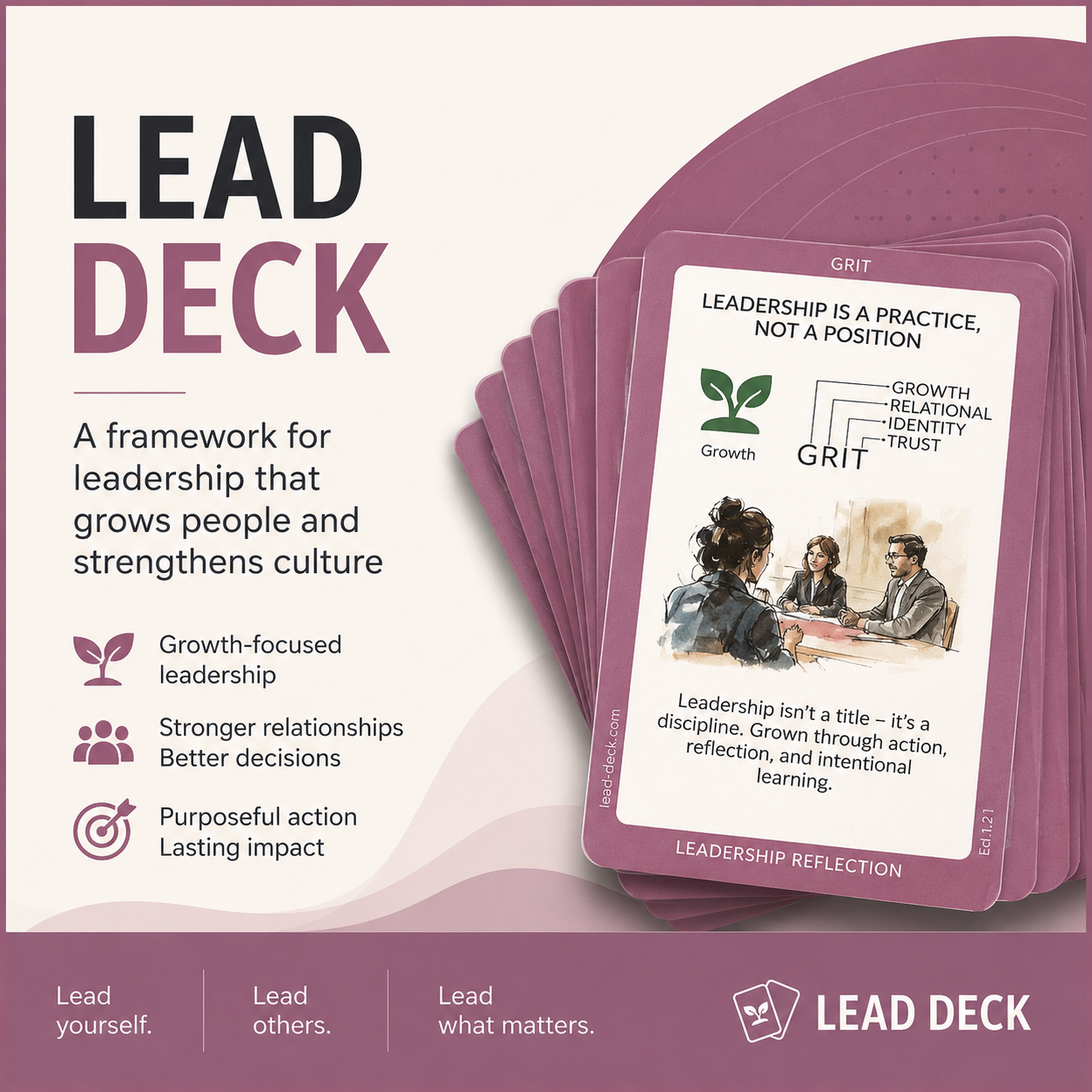
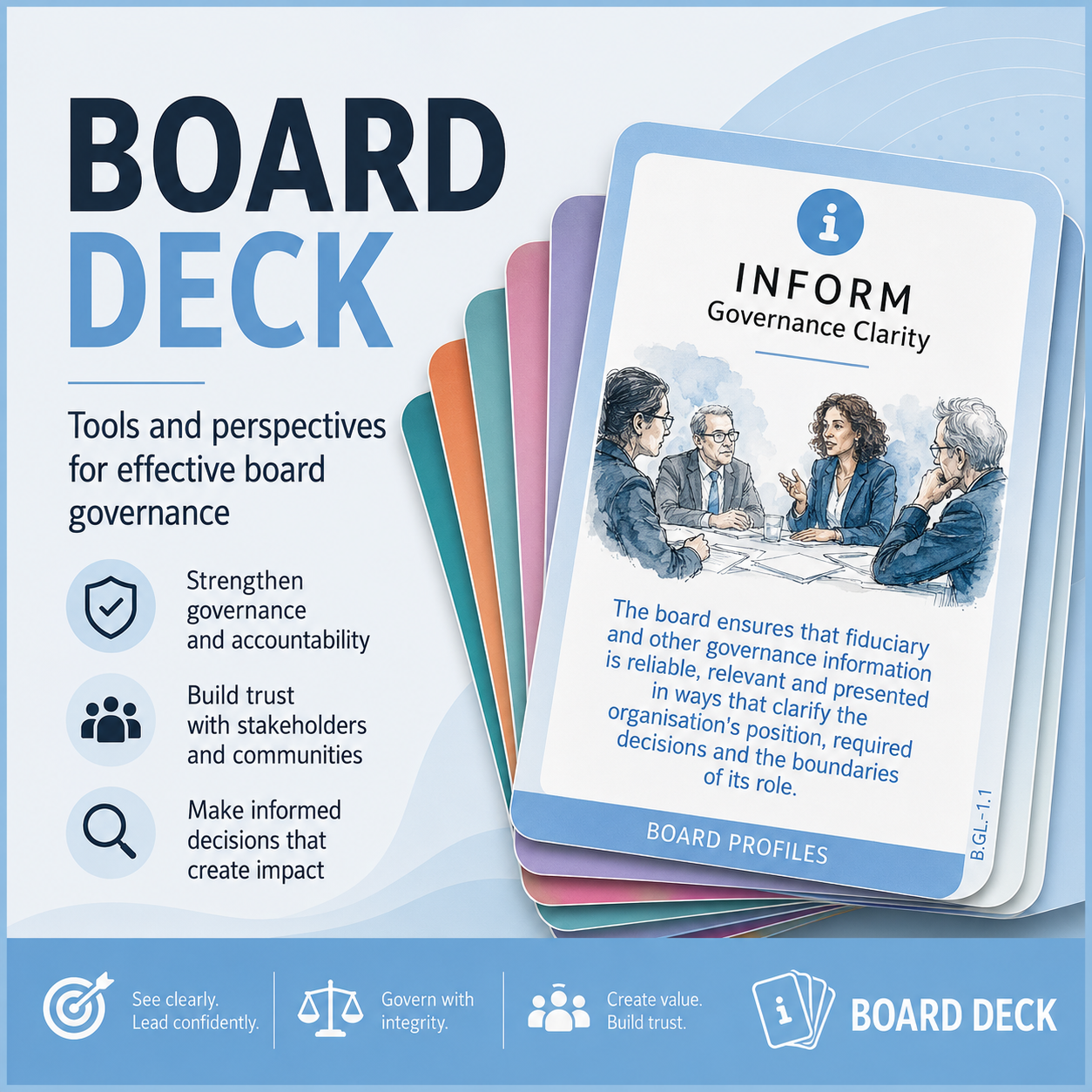
Relevant practices appear across Praxis, Lead and Board because the context changes while the underlying developmental purpose stays the same.
Recognition
How would you know judgement was developing? You would look for someone increasingly able to identify what information matters, distinguish what is known from what remains uncertain, weigh competing considerations, anticipate consequences, calibrate how confident the situation warrants, know when to decide and when to seek more, explain the reasoning behind a view, and revise it when later evidence warrants.
Calibration and revision matter most, because they are the hardest to fake. Someone who confidently explains a poor judgement can tick several of the earlier boxes; someone who knows how sure they should be, and changes their mind when the evidence turns, is much harder to counterfeit.
This is also the test that keeps the model honest. If increasingly good judgement never becomes recognisable, the Inform and Empower practices are not doing what we think they are.
The feedback loop
Practice, to recognition, to capacity, to principle, to purpose. What we can recognise in practice is how we learn whether the theory of action is working, or whether it needs to change.
Back to the Nine Map. Judgement is one of nine intersections, each opening into the same depth. Use the map above to move between them.