Workshops & Training

Training that changes what a school repeats.

Culture is what a school repeatedly practises. Our workshops are where that practice begins: a team learns to see its own operating system, diagnose the patterns it produces, and build the routines that change them. Everything else in the Synnovate system compounds from here.

See the workshops

Training is the way in.

Synnovate is the training layer - where schools first meet the discipline, experientially, before it is ever named. Two things make it hold: the Learning Deck decks turn the discipline into daily routines, and Loom preserves the thinking over time. Workshops open the door; the decks and the platform keep it open.

Synnovate · The way in

Workshops

Experiential training that builds Collective Thinking Design: seeing the system, diagnosing the pattern, and practising something different - until a team can carry it without a facilitator in the room.

Start here ↓

Learning Deck · Daily practice

The decks

Card-based routines that keep the discipline in daily use - shared ways of noticing, questioning, collaborating, and deciding that a team reaches for between the big moments.

Explore the decks →

Loom · Organisational memory

The platform

The governance platform that preserves decisions, documents, and the thinking behind them over time - so a culture can remember what it repeatedly practises.

Explore Loom →

The core arc: see, diagnose, practise.

Three workshops, one discipline. Each does one job well; together they move a team from noticing a problem to running an experiment that changes what the environment produces.

01

See the system

Beneath the Waterline

Six structured encounters teach a leadership team to see the hidden conditions shaping behaviour - before a single framework is named. Friction, permission, signals, meaning, visibility, constraints: the six lenses that make an invisible operating system visible. Experiential, not lectured.

You leave with: a diagnostic lens the team can use on Monday, underneath whatever plan you are already running.

View the full workshop →
02

Diagnose the pattern

Waterline Lab

The same six lenses, turned on your organisation's own recurring patterns. Participants bring real friction, not designed puzzles, and work it until they can name what the system is actually producing. The output is a System Visibility Map - a sharper question, not an action plan.

You leave with: a Visibility Map of one real pattern, and the sharper question underneath it.

View the full workshop →
03

Practise the change

Designing the Waterline

Seeing is not enough; culture changes when practice changes. Three principles - Attention, Accountability, Alignment - become practised routines, not slogans. The team runs one real four-meeting experiment, with a named guardian who checks: "Is the protocol holding?"

You leave with: one installed routine, running in a real meeting, and a way to know whether it held.

View the full workshop →

The same discipline, applied where you need it.

The Waterline arc is the core. Around it, the same diagnostic lens is built for the specific rooms a school works in - the board, the leadership team, the classroom, and the space between them.

Governance

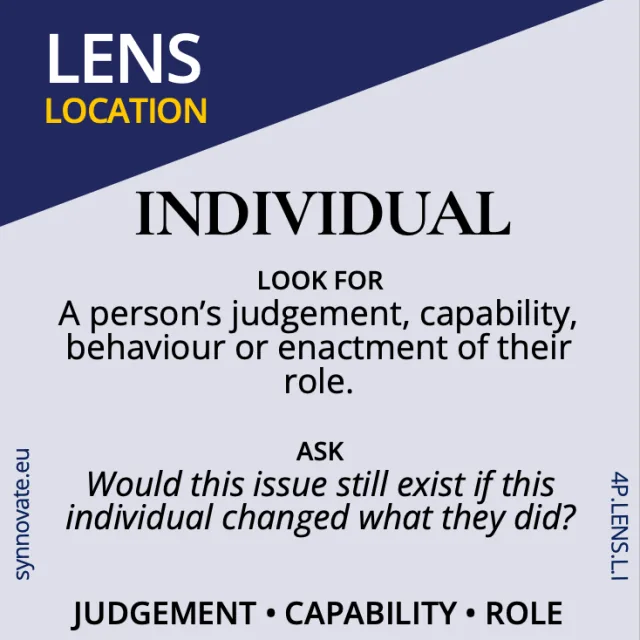
Boards misfire not from bad intent, but from misreading the situation. The governance lens builds the judgment to read it first.

  • LENS diagnostic framework: location, effort, nature, scope
  • Governance modes as responses, not starting points
  • Consequence literacy - seeing what your stance builds over time

Leadership Suite

Leaders misread the situation before they mismanage it. A one-day suite across the moments where that happens most.

  • FRAME: the conversation that fails before it begins - preparation as discipline
  • PLANS: strategy that cannot be held across a team is not strategy
  • TEAM: culture is built through recurring micro-decisions, not away-days
  • DYNAMICS: behavioural problems feel personal - they are almost always patterns

Cross-Layer Coherence

Board members, leaders, and teachers in one room, on one case study - because the failure at each layer is the same failure at a different altitude.

  • One case study, three diagnostic frameworks, one connecting question
  • Governance misread cascades to leadership misread cascades to classroom failure
  • The whole leadership system addressed at once

Pedagogy

Classrooms can look active while thinking stays narrow. This makes the architecture of learning visible - where thinking is, and where it needs to go.

  • Making the architecture of learning visible
  • 4D facilitation: Disrupt, Diverge, Develop, Decide
  • SPARK: designing for impact, not just activity

Around the workshops.

The offerings that make the work stick - training your own facilitators, preparing for accreditation, and connecting it all into Loom.

Trainer Training

Full-day certification for internal facilitators, so the discipline lives in the school, not the consultant. The five facilitation disciplines, supervised practice, and a pathway from supervised to train-the-trainer.

Accreditation

Accreditation exposes what was already misaligned. We map evidence to standards before the process begins, so the school can demonstrate what it does - not just describe it.

Loom Integration

Governance quality is only visible if it is recorded. Loom connects decisions, policies, and board packs into one institutional record - pattern visibility over time, linking decisions to outcomes.

Which room do you want to change first?

Most schools start with the Waterline arc and add a domain workshop where the pressure is highest. A short conversation is the best way to find the right entry point.

Book a conversation